



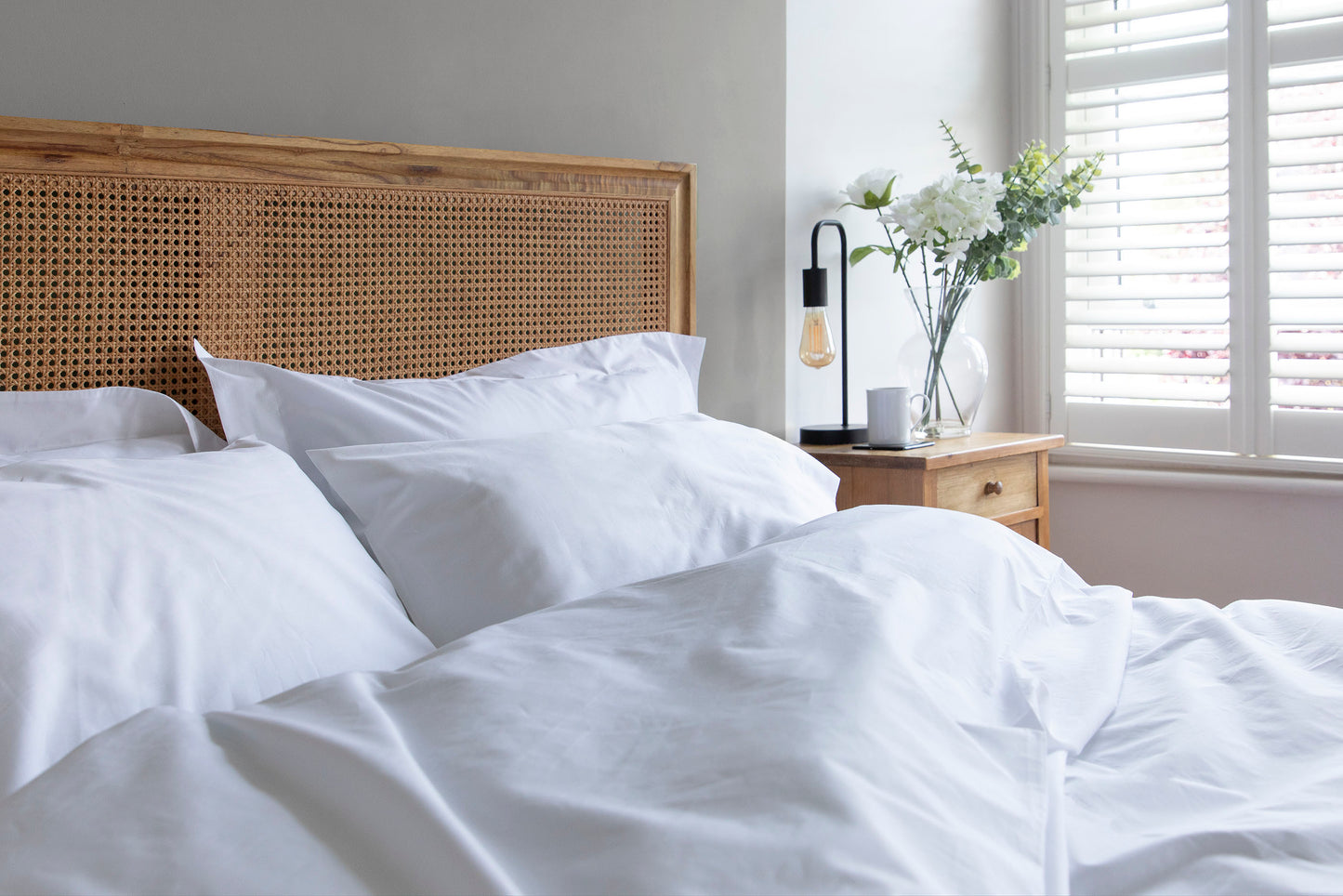
Better Than Black Friday - Flash Sale - 100% Pure Cotton bedding range, and luxurious handmade 100% European linen bedding.
Crafted for comfort. Priced for a limited time.

Quick answer: Yes, linen sheets can be worth the cost if you value breathable natural fibres, long-lasting comfort and year-round versatility. However, quality cotton may offer better value for some sleepers.
Linen sheets have a reputation for being luxurious, breathable and expensive. But when a single fitted sheet can cost considerably more than its cotton equivalent, it's reasonable to ask whether the difference is genuinely worth paying for.
The answer depends on what you expect from your bedding.
After working closely with both European linen and premium cotton, I've come to appreciate that the real difference isn't simply softness or appearance. It's how the fabric feels against your skin, how it behaves after repeated washing and whether it suits the way you sleep.
There's also an important distinction between buying an entire linen bedding set and investing in one well-made fitted sheet. You don't necessarily need to replace everything on your bed to experience the benefits of linen bedding.
The price of linen begins with the flax plant, long before the material becomes a finished bedsheet.
Linen is produced from fibres extracted from the stems of flax (Linum usitatissimum). Transforming those stems into usable yarn involves several stages, including retting, fibre separation, spinning, weaving and finishing.
These processes require specialist knowledge and careful handling. Unlike synthetic fibres, which can be manufactured to highly consistent specifications, flax is a natural agricultural material.
The Alliance for European Flax-Linen & Hemp provides information about European flax cultivation, fibre traceability and the European linen supply chain.
Several factors influence the price of finished linen sheets:
The more useful question is whether the specifications and manufacturing quality justify the price.
One specification worth understanding is GSM, or grams per square metre.
GSM measures the weight of fabric over a defined area. It doesn't measure thread count, softness or quality directly.
Linen Bay's European linen weighs approximately 160 g/m², providing a balance between a substantial feel and comfortable everyday use.
Extremely lightweight linen may feel airy but can be less substantial. Heavier linen may feel more robust but isn't necessarily more comfortable, particularly for people who prefer lighter bedding.
A 160 g/m² fabric is a practical middle ground for sheets intended for use throughout the year.
It's also important to understand that fabric weight alone cannot predict durability. Fibre quality, yarn construction, weave, finishing and laundering all influence how a sheet performs over time.
Linen is often marketed as summer bedding, but that overlooks one of its most useful qualities: versatility.
Flax-based linen can absorb moisture and allow it to evaporate, helping manage the humid feeling that can develop beneath bedding.
Its structure and weave also influence airflow and heat transfer.
Research published in the Textile Research Journal and other textile science publications explores how fibre properties, fabric construction and moisture management influence thermal comfort.
These properties help explain linen's popularity in warmer conditions, although no fabric can guarantee cooler sleep for everyone.
During colder months, linen can remain comfortable when combined with a suitable duvet and other bedding layers.
Your duvet's tog rating, mattress, room temperature and individual preferences all contribute to your sleeping environment.
One of the biggest surprises when moving from cotton to linen is the difference in texture.
Cotton sateen feels smooth and refined. Percale feels crisp and fresh. Linen has a more substantial, naturally textured character.
Stone-washing helps soften linen during manufacturing, so it doesn't necessarily need months of use before becoming comfortable.
Nevertheless, it won't feel identical to cotton.
With regular use and appropriate laundering, linen often becomes more supple. This gradual change is part of its appeal, but it's worth understanding before purchasing.
Linen is a plant-based fibre, not a synthetic imitation of natural bedding.
For customers interested in textile testing, OEKO-TEX STANDARD 100 provides a recognised framework for testing textiles against specified harmful substances.
Linen Bay's European linen carries OEKO-TEX certification and is made using EUROPEAN FLAX-certified flax.
These certifications offer useful information about testing and fibre provenance, although neither should be interpreted as a guarantee of better sleep or treatment for skin conditions.
For people with sensitive skin, comfort also depends on texture, washing products and personal sensitivities. The National Eczema Society provides independent guidance about managing eczema and everyday skin irritants.
Linen has a reputation for strength, but it's important to distinguish the properties of the fibre from the lifespan of a finished sheet.
Flax fibres are naturally strong. However, durability also depends on yarn quality, fabric construction, abrasion, washing conditions and how frequently the sheet is used.
A well-made cotton sheet can last for years, just as poorly manufactured linen can deteriorate prematurely.
One consideration often overlooked is that fitted sheets experience considerable wear. They remain under tension around the mattress and are exposed to movement, friction and repeated washing.
This makes construction particularly important.
Look for:
Consistent weaving without obvious thin areas.
Secure seams and durable elastic.
Sufficient mattress depth to avoid overstretching.
Clear washing instructions.
Reliable information about fibre composition and manufacturing.
These details are often more useful than an impressive-sounding thread count.
The answer depends largely on your preferences.
For people who love the crisp, freshly made appearance associated with luxury hotels, cotton percale remains an excellent choice.
Those who prefer a smoother, silkier feel may be happier with cotton sateen.
Linen offers something different: a relaxed texture, natural drape and comfortable breathability without requiring a perfectly ironed finish.
The Sleep Foundation's bedding guidance similarly emphasises that fabric preferences depend on factors including texture, warmth, breathability and personal comfort.
For customers considering premium cotton, it's also worth understanding certifications. The Global Organic Textile Standard (GOTS) establishes requirements for certified organic textiles, including processing criteria and chain-of-custody controls.
Linen Bay's organic cotton bedding is GOTS-certified, offering another natural-fibre option for customers who don't prefer linen's distinctive texture.
Neither fabric is universally superior.
A useful way to evaluate expensive linen sheets is to calculate their cost per night.
Consider an illustrative example, rather than a comparison of current retail prices.
Suppose a linen fitted sheet costs £120 and remains in regular use for five years.
If used every night, its purchase cost works out at approximately 6.6p per night.
A £60 cotton sheet lasting three years would cost approximately 5.5p per night under the same assumptions.
The linen costs more, but the difference becomes relatively small when spread across years of use.
Of course, these are hypothetical lifespans, not guarantees. Rotating sheets, washing frequency and everyday wear can change the calculation substantially.
The more important question is whether you enjoy the additional comfort enough to justify the difference.
Paying more for bedding you genuinely prefer can make sense. Paying more for a fashionable fabric that doesn't suit you probably doesn't.
You don't need a complete linen bedding set to discover whether linen suits you.
In fact, starting with an individual fitted sheet is often the more practical approach.
A fitted sheet remains in direct contact with much of your body throughout the night, making it an effective way to experience linen's texture and moisture-handling properties.
It also allows you to retain your existing cotton duvet cover and pillowcases.
For someone with a £100–£200 budget, I'd generally suggest prioritising the sheet that makes the greatest difference to their everyday comfort rather than replacing everything immediately.
Before ordering, measure your mattress carefully.
A standard mattress and a deep mattress may require different fitted-sheet dimensions, particularly when a topper is used.
A sheet that's too shallow can repeatedly pull away from the corners, regardless of how expensive the fabric is.
For additional guidance on fit, read our article about whether fitted sheets should be tight.
Good linen doesn't need complicated maintenance, but sensible laundering helps preserve its appearance and structure.
One advantage is that linen generally doesn't require ironing to look attractive.
Its natural creases are part of its appearance, making it particularly suitable for relaxed, contemporary bedrooms.
For more guidance on choosing between bedding fabrics, our article Which Duvet Covers Should I Buy? explains how material, comfort and practical requirements influence the decision.
They can be. Linen's moisture-handling properties and breathable construction make it appealing for warmer sleeping conditions. However, your duvet, mattress and bedroom temperature also influence comfort.
Generally, yes. Quality linen often becomes more supple with use and laundering. Stone-washed linen has already undergone a softening process, although it retains its characteristic texture.
No. Price alone doesn't establish quality. Fibre provenance, fabric weight, finishing, stitching, sizing and independent textile certifications provide more meaningful information.
Absolutely. Mixing linen fitted sheets with cotton duvet covers and pillowcases is a practical way to combine different textures and control costs.
Yes, provided they're combined with appropriate bedding. Linen can be comfortable year-round, although people who prefer a particularly warm, brushed texture may favour other fabrics during colder months.
Linen sheets are worth considering when you value natural texture, breathable comfort, easygoing appearance and the potential for years of regular use.
They aren't necessarily the right investment if you prefer the crisp finish of cotton percale or the smoothness of cotton sateen.
Having worked with both fabrics, I wouldn't recommend linen simply because it carries a premium price. The benefit is in the experience it provides and whether that experience suits your preferences.
For anyone uncertain about committing to a complete bedding set, starting with one quality fitted sheet makes particular sense.
Explore our European linen bedding collection to learn more about the fabric, its specifications and available bedding options.
The best bedding investment isn't necessarily the most expensive. It's the one you'll enjoy sleeping in, night after night.