Summer Sale - Ends Sunday - 100% Pure Cotton bedding range, and luxurious handmade 100% European linen bedding.
Crafted for comfort. Priced for a limited time.


Quick answer: Towels are widely reported as one of the most commonly stolen hotel items, followed by bathrobes, pillows and hangers. More importantly, these are all products associated with comfort, quality and memorable sleep, revealing what guests truly value most during a hotel stay.
We've all done it.
You've checked into a beautiful hotel, slept exceptionally well, wrapped yourself in an impossibly soft towel and thought:
"I wish my home felt like this."
For most of us, that's where the thought ends.
For others, however, the temptation proves a little stronger.
Every year, hotels around the world lose thousands of items to guests who decide to take home more than just their memories. While miniature toiletries and complimentary slippers are generally expected to disappear, many hotels report missing towels, bathrobes, pillows and even decorative furnishings.
It might sound amusing, but behind these stories lies an interesting insight into human behaviour. The items that disappear most frequently all have something in common—they make people feel comfortable, relaxed and cared for.
That is also why hotel bedding popularity continues to grow. Guests don't simply admire luxurious hotel bedrooms; they actively search for ways to recreate the same experience at home through quality cotton bedding, linen bedding, supportive pillows, breathable duvets and beautifully made bed sheets.
Although individual hotels report different experiences depending on their location and market, hospitality professionals consistently identify a handful of items that disappear far more often than others. Reports from hospitality publications such as Hotel Management, Hospitality Net and surveys of hotel operators regularly place towels and bathrobes near the top of the list.
| Rank | Hotel Item | Usually Allowed to Take? | Why Guests Want It |
|---|---|---|---|
| 1 | Towels | ❌ No | Thick, soft and luxurious |
| 2 | Bathrobes | ❌ No (unless purchased) | Spa-like comfort |
| 3 | Pillows | ❌ No | Exceptional sleep quality |
| 4 | Clothes hangers | ❌ No | Surprisingly useful |
| 5 | Decorative cushions | ❌ No | Stylish home décor |
| 6 | Mini toiletries | ✅ Usually | Complimentary amenities |
| 7 | Slippers | ✅ Usually | Disposable and complimentary in many hotels |
| 8 | Pens and notepads | ✅ Usually | Convenient souvenirs |
| 9 | Tea and coffee sachets | ✅ Usually | Included for guests |
| 10 | Hairdryers, kettles or electronics | ❌ No | Rare but occasionally reported |
Most hotels understand that consumable amenities such as shampoo, soap and tea bags are part of the guest experience. Towels, bedding and robes, however, remain hotel property unless specifically offered for sale.

The obvious answer might seem simple: because they're free.
Psychologists, however, suggest something more interesting.
Research into consumer behaviour has shown that physical objects often become associated with emotional experiences. Souvenirs help people preserve positive memories, particularly those linked with holidays, celebrations and relaxation.
Hotels create environments specifically designed to make guests feel comfortable. Every detail—from lighting and fragrance to mattress selection and bedding—is carefully chosen to create positive emotional associations.
When guests take a towel or robe, it is rarely because they need another towel.
More often, they are trying to take home a feeling.
That feeling includes:
Hospitality marketers understand this remarkably well. Many premium hotels now sell their bedding, robes and towels through online boutiques because they recognise guests want to recreate the experience legally rather than simply remember it.
If there is one item that appears again and again in industry discussions, it is the humble hotel towel.
But why?
Quality hotel towels feel noticeably different from many found in the average home.
They're typically manufactured from long-staple cotton, woven with generous pile heights and designed for commercial laundering while retaining softness. Higher-quality cotton fibres produce smoother yarns that feel softer against the skin and remain absorbent after repeated washing. Organisations such as Cotton Incorporated have published extensive research into cotton's absorbency, breathability and comfort characteristics, helping explain why cotton continues to dominate premium hospitality textiles.
A luxury hotel towel usually offers:
Interestingly, the colour matters too.
Most luxury hotels choose white towels not simply because they look elegant, but because they communicate cleanliness. White textiles can also be laundered at higher temperatures without worrying about colour fading, an important consideration for commercial hospitality businesses.
If towels represent comfort, bathrobes represent indulgence.
Stepping out of a hot shower and into a thick cotton robe creates an immediate sense of luxury. That experience has become so closely associated with premium hotels that many guests actively search online to buy the same robe after returning home.
Many leading hotels now anticipate this demand.
Rather than replacing missing robes, they simply offer them for sale.
This reflects an important shift in hospitality. Hotels increasingly recognise that guests don't just purchase accommodation—they buy experiences. Comfortable textiles become part of that experience.
Few products influence sleep as much as a pillow.
The Sleep Foundation notes that the right pillow helps maintain healthy spinal alignment and may improve sleep quality by supporting the head and neck according to sleeping position. That makes pillows highly personal.
Guests frequently describe memorable hotel pillows as:
It's hardly surprising that some people enquire whether they can buy the exact pillow they've just slept on.
Many hotels now partner with bedding manufacturers to sell identical or similar pillow collections directly to guests.
Not everything in a hotel room is off-limits.
In fact, some amenities are specifically provided to be taken home.
✔ Mini shampoo bottles
✔ Conditioner
✔ Soap
✔ Tea and coffee sachets
✔ Sewing kits
✔ Shower caps
✔ Disposable slippers (where provided)
✔ Pens and notepads (at many hotels)
✖ Towels
✖ Bathrobes
✖ Pillows
✖ Bedding
✖ Hairdryers
✖ Kettles
✖ Artwork
✖ Decorative accessories
When in doubt, it's always worth asking reception. Many hotels are delighted to sell guests the products they've enjoyed during their stay.
Interestingly, relatively few guests search online for "hotel towels."
Far more search for:
That says something important.
The real attraction isn't necessarily the individual items—it's the complete sleep experience.
Luxury hotels understand that exceptional sleep is built in layers, not through a single expensive product.
If you're curious about exactly what luxury hotels choose for their beds, our guide to what bedding is used in 5-star hotels explains the materials, layering techniques and bedding choices that create that unmistakable hotel sleep experience.
A memorable hotel bed typically combines:
Unlike many assumptions, there is rarely a secret ingredient. Instead, the difference comes from careful material selection, professional laundering and attention to detail.
Many people assume luxury hotels have access to secret bedding that simply isn't available to the public.
In reality, the difference usually comes down to quality materials, thoughtful design and meticulous housekeeping rather than exclusive products.
Hotels invest heavily in bedding because guest satisfaction is closely linked to sleep quality. A comfortable night's sleep often influences online reviews just as much as the location, food or service.
The table below highlights some of the differences between an average bed and one designed to deliver a premium hotel experience.
| Typical Home Bedding | Hotel-Quality Bedding |
|---|---|
| Mixed fibre fabrics | Natural cotton or linen |
| Decorative colours and patterns | Crisp white bedding |
| Single pillow | Multiple pillow options |
| Heavy, less breathable duvet | Balanced duvet for year-round comfort |
| Infrequent replacement | Commercial laundering and regular renewal |
| Basic layering | Carefully layered sleep system |
One of the biggest contributors is fabric choice.
Natural fibres such as organic cotton and European linen are valued for their breathability, moisture management and comfort. Cotton allows air to circulate while remaining soft against the skin, while linen is naturally thermoregulating, helping sleepers remain comfortable throughout the year.
If you love the relaxed elegance found in boutique hotels, explore our collection of European linen duvet cover sets, crafted from premium European flax for naturally breathable comfort throughout the year.
The Sleep Foundation highlights temperature regulation as one of the key factors influencing sleep quality, while organisations such as Textile Exchange continue to promote responsibly sourced natural fibres for both environmental and consumer benefits.
Walk into almost any premium hotel and you'll notice one thing immediately.
White sheets.
White duvet covers.
White pillowcases.
White towels.
This isn't simply a design choice.
White bedding became popular after hotels realised guests associated it with cleanliness, freshness and luxury.
From a practical perspective, white textiles can also withstand high-temperature commercial laundering without colour fading. Hotels need bedding that looks immaculate after hundreds of wash cycles, and white cotton performs exceptionally well.
There is also a psychological effect.
Bright white bedding reflects more light, making rooms appear cleaner and more spacious. Studies into colour psychology have consistently found that white environments are associated with purity, calmness and simplicity—qualities that naturally complement a restful bedroom.
The luxurious appearance of hotel beds therefore comes from a combination of visual presentation and tactile comfort rather than thread count alone.
For years, thread count dominated bedding marketing.
Consumers were encouraged to believe that higher numbers automatically meant better quality.
The reality is more nuanced.
While thread count can influence the feel of a fabric, the quality of the cotton fibres, yarn construction, weave and finishing process are often far more important.
A well-made 270 thread count percale sheet manufactured from premium organic cotton can easily outperform a poorly constructed fabric claiming a much higher thread count.
Similarly, beautifully woven European linen contains no thread count measurement at all, yet it remains one of the world's most sought-after luxury bedding fabrics because of its durability, breathability and distinctive texture.
When comparing bedding, experts generally recommend considering:
Rather than focusing on a single marketing number.
Another reason hotel-inspired bedding has become so popular is growing awareness of healthier sleep environments.
Many people now actively seek bedding made from natural fibres and independently certified textiles.
Recognised certifications provide reassurance that products have been manufactured to high environmental and safety standards.
| Certification | What It Means |
|---|---|
| OEKO-TEX® STANDARD 100 | Tested for harmful substances and chemicals. |
| Global Organic Textile Standard (GOTS) | Organic fibres with strict environmental and social criteria throughout production. |
| EUROPEAN FLAX® | Traceable European-grown flax produced without irrigation or genetically modified crops. |
| Textile Exchange Standards | Promotes responsible sourcing and sustainable textile production. |
For households affected by sensitive skin, choosing certified natural fibres may also be beneficial. Organisations including the British Skin Foundation and the National Eczema Society regularly encourage people with sensitive skin to avoid unnecessary irritants where possible and to choose breathable, skin-friendly fabrics alongside appropriate skincare routines.
Although bedding alone cannot prevent skin conditions, natural fibres often provide a more breathable sleeping environment than many synthetic alternatives.
The good news is that creating a luxurious bedroom doesn't require booking into a five-star hotel every weekend.
Many of the details that make hotel beds memorable can be recreated surprisingly easily.
✓ Choose breathable natural fibres such as cotton or linen.
✓ Use crisp, freshly laundered bed sheets.
✓ Layer the bed rather than relying on one heavy duvet.
✓ Invest in supportive pillows suited to your sleeping position.
✓ Keep colours simple and calming.
✓ Wash bedding regularly using gentle detergents.
✓ Allow bedding to breathe between uses.
✓ Replace worn pillows and duvets when they lose support.
Looking for more practical ideas? Our guide to creating hotel-quality bedding at home explores the simple changes that can transform an ordinary bedroom into a relaxing five-star retreat.
Luxury is often less about extravagance and more about consistency.
Fresh bedding, quality materials and thoughtful layering can transform almost any bedroom.
Industry reports consistently suggest towels are among the most frequently missing hotel items, followed by bathrobes, pillows and clothes hangers. Complimentary toiletries and slippers are usually intended for guests to take home.
Yes. Most hotels keep an inventory of room contents and may charge guests if towels, robes, bedding or other hotel property is missing after check-out.
Hotel beds combine supportive mattresses, breathable bedding, quality pillows, professional laundering and carefully layered sleep systems. Together, these create a cleaner, fresher and more comfortable sleeping environment.
White bedding conveys cleanliness, freshness and simplicity. It is also easier to launder at commercial temperatures and creates a timeless appearance that suits almost every interior style.
Both are excellent choices. Cotton offers a crisp, smooth finish that many hotels favour, while linen provides exceptional breathability, moisture regulation and a beautifully relaxed appearance. The best option depends on personal preference and the sleeping environment.
Absolutely. Choosing high-quality natural bedding, comfortable pillows, a balanced duvet and breathable fabrics will help recreate much of the comfort associated with premium hotel bedrooms.
Looking back at the list of commonly stolen hotel items, a clear pattern emerges.
Guests rarely try to take home objects because they are expensive.
They are drawn to the products that made them feel relaxed, comfortable and well rested.
A soft towel becomes memorable after a long journey.
A supportive pillow can provide one of the best night's sleep you've had in months.
Beautiful bedding transforms an ordinary bedroom into a place where switching off feels effortless.
That emotional connection explains why so many people return home searching online for hotel bedding, luxury cotton bedding, hotel-quality duvets, breathable bed sheets and comfortable pillows. They are not looking to recreate a hotel room; they are looking to recreate the feeling that came with it.
Choosing thoughtfully made bedding crafted from natural fibres is one of the simplest ways to bring a little of that experience into everyday life. Whether you prefer the crisp freshness of organic cotton or the relaxed elegance of European linen, quality materials, careful craftsmanship and breathable fabrics can make every night feel a little more restorative.
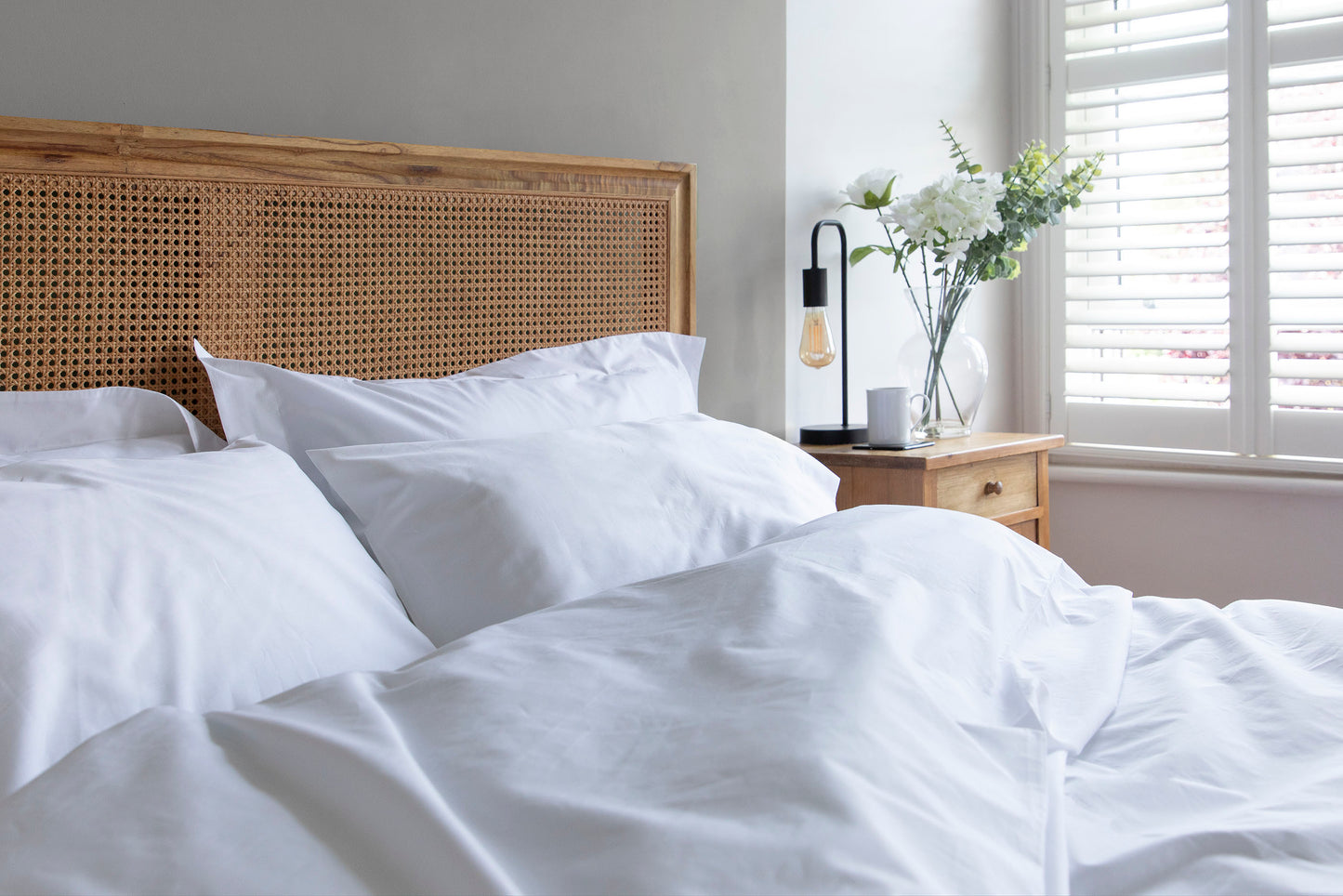
Crisp, breathable organic cotton duvet covers remain one of the easiest ways to recreate the fresh, clean feeling of luxury hotel bedding in your own home.
After all, the best souvenir from a wonderful hotel stay isn't a towel hidden in a suitcase.
It's discovering how to enjoy that same sense of comfort every time you climb into bed.