



Better Than Black Friday - Flash Sale - 100% Pure Cotton bedding range, and luxurious handmade 100% European linen bedding.
Crafted for comfort. Priced for a limited time.

Quick answer: You can buy hotel-quality bedding in the UK from specialist bedding retailers, department stores and independent brands such as Linen Bay. Look for long-staple cotton, quality weaving, durable construction and recognised textile certifications.
There's something unmistakable about climbing into a beautifully made hotel bed. The sheets feel cool, the duvet has just the right weight, and the pillows offer that wonderful combination of softness and support.
But what actually creates that experience?
Having stayed in many hotels and subsequently spent considerable time sourcing fabrics and developing bedding products, I've come to appreciate three things: feel, finish and consistency.
The hotels that impressed me most weren't necessarily the most expensive. They were often those using excellent cotton percale, properly laundered and ironed sheets, supportive pillows and a duvet that felt substantial without being excessively heavy.
The real test comes later. Can those sheets retain their comfort, appearance and strength after repeated washing?
Hotel bedding must withstand considerably more laundering than typical household bedding. That makes durability just as important as softness.
The Sleep Foundation's hotel bedding guide identifies fabric quality, weave, durability and comfort as important considerations when choosing hotel-style sheets.
For anyone shopping for luxury bedding in the UK, these are better starting points than an expensive price tag.
There are several options, depending on your budget, preferred materials and whether you're trying to recreate a traditional hotel bed or something more contemporary.
Independent bedding specialists can be particularly useful because they often provide detailed fabric specifications rather than relying on descriptions such as 'supreme luxury'.
Look for retailers explaining:
These details help you compare actual construction rather than marketing claims.
Established UK retailers such as John Lewis and The White Company offer hotel-inspired bedding collections, including cotton sheets, duvet covers and pillowcases.
They can be useful places to examine fabrics in person, although a premium retail price doesn't automatically guarantee better materials.
Compare the specifications before deciding.
Smaller direct-to-consumer companies can offer another route to premium bedding.
Linen Bay's certified cotton bedding collection focuses on natural fabrics, including crisp cotton percale and smoother cotton sateen.
Our approach is straightforward: invest in the quality of the cotton, weaving and finishing rather than relying on extravagant packaging or inflated thread counts.
The important distinction is that hotel-quality describes a standard of comfort and construction, not necessarily bedding supplied directly to commercial hotels.
One of the most surprising lessons from developing Linen Bay has been how misleading thread count can become.
For years, shoppers have been encouraged to believe that 800, 1000 or even 1200 thread count sheets must be superior.
That's simply not a reliable way to judge bedding.
Thread count measures the number of warp and weft threads within one square inch of woven fabric. However, some manufacturers count individual strands within multi-ply yarns, producing impressively large figures without necessarily improving comfort.
The Sleep Foundation's research into thread counts explains why fibre quality, yarn construction and weave should be considered alongside the advertised number.
A well-made 270TC long-staple cotton percale sheet can therefore be a better purchase than a poorly constructed 1000TC alternative.
For the classic hotel experience, I'd generally recommend:
Some luxury hotels use thread counts above these ranges, so there isn't one universal hotel specification.
The quality of the yarn matters enormously. Longer cotton fibres can be spun into finer, stronger yarns with fewer protruding fibre ends.
That's why I place greater importance on cotton quality than headline thread count.
These three fabrics can all produce beautiful bedding, but they create noticeably different sleeping experiences.
If you're still deciding which fabric is right for you, our guide to which duvet covers you should buy explains the differences in comfort, breathability, durability and everyday care.
Percale uses a simple one-over, one-under weave.
This produces a structured fabric with a clean, crisp handle and excellent breathability.
Our 270TC cotton percale weighs approximately 110gsm, giving it a lightweight yet substantial feel.
For someone who loves slipping into cool, freshly laundered hotel sheets, this would be my first recommendation.
Sateen uses a different weave structure, allowing longer yarn floats across the surface.
The result is a smoother fabric with a subtle sheen and more fluid drape.
Linen Bay's 300TC cotton sateen weighs approximately 120gsm.
Sateen is particularly appealing if you enjoy a softer initial feel rather than percale's crispness.
The Sleep Foundation's comparison of sateen and percale explains how weave structure influences texture, breathability and warmth.
Linen creates a different atmosphere.
Instead of tightly pressed, crisp sheets, imagine a relaxed coastal boutique hotel with beautifully textured bedding.
Our stone-washed European linen weighs approximately 160gsm and develops a softer, more lived-in character with laundering.
European flax provenance can be independently verified through the Alliance for European Flax-Linen & Hemp, whose Masters of FLAX FIBRE certification succeeds the European Flax designation.
For traditional five-star hotel styling, I'd choose percale. For relaxed luxury, linen is a wonderful alternative.
You don't need an interior designer or an enormous budget.
The best hotel beds work because the individual elements complement one another.
Here's how I'd recreate that experience.
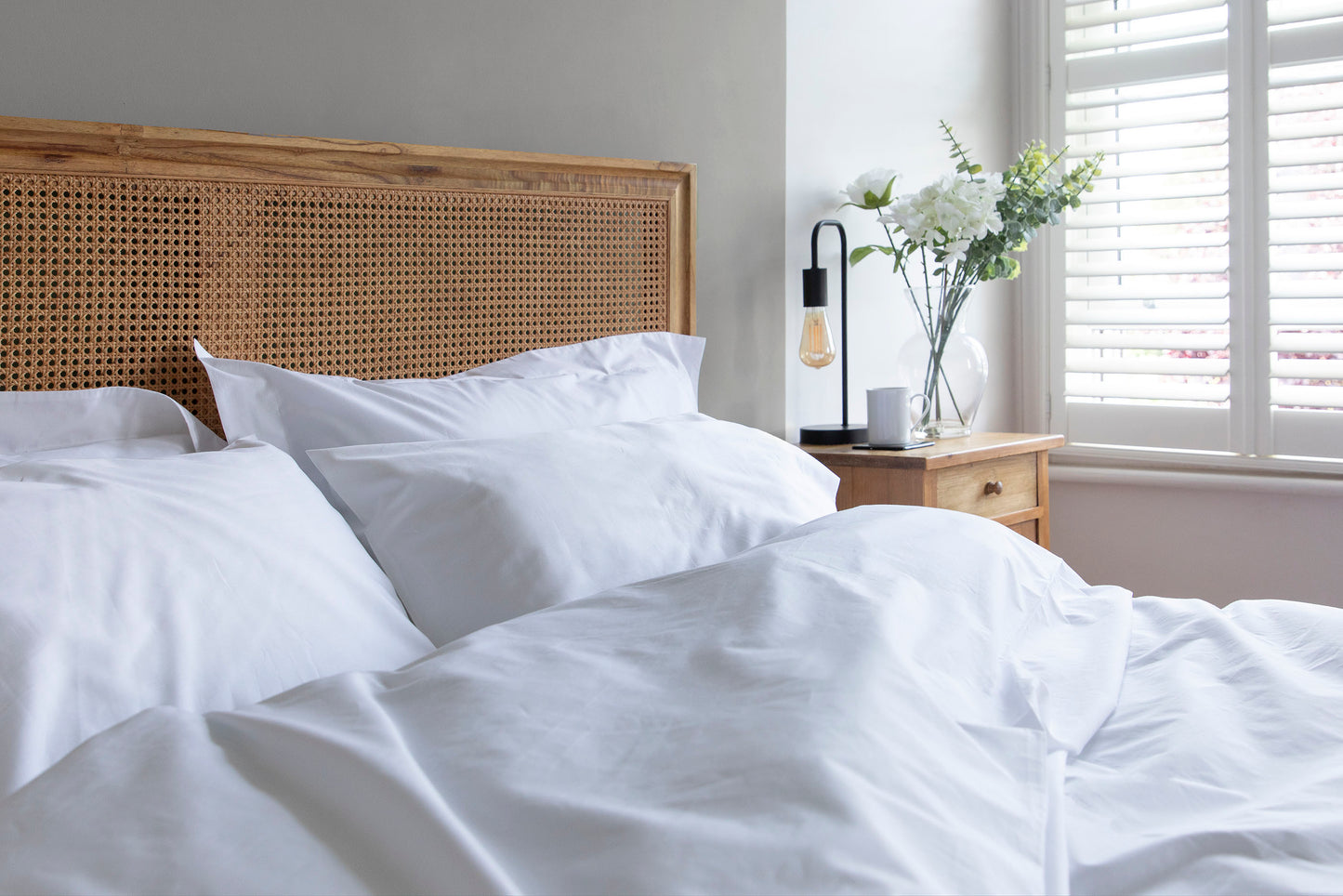
White bedding is my personal preference for a traditional hotel look.
It reflects light, coordinates with virtually any bedroom and makes the entire bed appear fresh and inviting.
Choose a well-fitting cotton fitted sheet. Measure your mattress depth, including any topper, before ordering.
For example, a 30cm-deep mattress requires a sheet with sufficient pocket depth to accommodate it comfortably.
For many UK bedrooms, a 10.5 tog duvet is a useful starting point, although the ideal warmth depends on room temperature, filling and personal preference.
If you're wondering how luxury hotels achieve that wonderfully light yet substantial feeling, our guide to what duvets high-end hotels use explains the fillings, tog ratings and construction that help create five-star comfort.
A lighter 4.5 tog duvet may be more comfortable during warmer months.
I particularly like two pillows per person: one offering firmer support and another providing softness and volume.
Choose pillow height and firmness according to your sleeping position rather than appearance alone.
Oxford pillowcases have a decorative fabric border, typically around 5–7cm, creating a structured, tailored finish.
A flat sheet adds another layer between you and your duvet, particularly useful during warmer weather.
Make the bed in this order:
The finishing touch is simple: smooth the fabric, straighten the seams and avoid excessive decorative cushions.
A beautiful photograph cannot tell you everything about how bedding was manufactured.
When sourcing cotton, I wanted more than attractive fabric samples. I wanted credible evidence supporting material and production claims.
Three standards are particularly useful to understand.
The Global Organic Textile Standard addresses organic fibre content alongside environmental and social requirements for textile processing.
GOTS certification applies to qualifying products and supply chains, not simply any cotton described as organic.
The Textile Exchange also explains why traceability is important when verifying organic cotton claims.
OEKO-TEX STANDARD 100 certification indicates that a textile has been tested against specified limits for harmful substances.
It is not an organic farming certification, and it doesn't mean bedding is medically proven to prevent allergies.
The distinction matters, particularly for customers concerned about textile chemistry.
Better Cotton supports improvements in cotton farming practices, but participation is not equivalent to GOTS organic certification.
When buying bedding, check which standard applies to the actual product and whether its certification can be verified.
These details offer more meaningful reassurance than vague claims about being 'eco-friendly' or 'chemical-free'.
Even exceptional cotton can lose its appeal when poorly maintained.
One reason hotel bedding feels so good is the attention given to laundering, drying and presentation.
My recommendations for home care are:
Ironing slightly damp cotton percale can help achieve that beautifully smooth hotel finish.
Avoid fabric softener build-up and unnecessary high-temperature drying, both of which can affect fabric performance over time.
Not necessarily.
Having worked directly with bedding suppliers, I've learned that premium bedding and expensive bedding aren't always the same thing.
Premium bedding should justify its price through materials, manufacturing, stitching, finishing and durability.
Expensive bedding may include those qualities, but the price can also reflect branding, packaging and retail overheads.
When comparing hotel quality sheets in the UK, I'd prioritise:
You don't automatically need to spend £200 or more to achieve a comfortable hotel-style bed.
Buying well-made sheets and maintaining them properly can be more worthwhile than buying the most expensive collection available.
Many luxury hotels favour white cotton bedding, often percale or sateen, alongside supportive pillows and quality duvets. Exact specifications vary between hotels and suppliers.
Yes. A well-constructed 270TC cotton percale fabric can deliver the crispness, breathability and durability associated with traditional hotel bedding.
Absolutely. Organic cotton can be woven into premium percale or sateen fabrics. Certification supports verified sourcing and processing claims, while fibre quality and construction determine how the finished bedding feels.
Look for UK retailers that publish clear specifications, explain their materials and provide reliable customer support. Specialist independent brands are worth considering alongside established department stores.
The most memorable hotel beds aren't necessarily the most expensive. They're the ones where every detail works together.
Cool, crisp sheets. A comfortable duvet. Pillows that support you properly. Fabrics that continue performing after repeated washing.
That combination inspired much of the thinking behind Linen Bay.
If you're looking to buy hotel bedding for your own home, start with the material and weave rather than the price tag.
For the classic freshly made hotel bed, my recommendation remains quality long-staple cotton percale, ideally in white.
It's a simple choice, but sometimes the simplest details make the greatest difference.