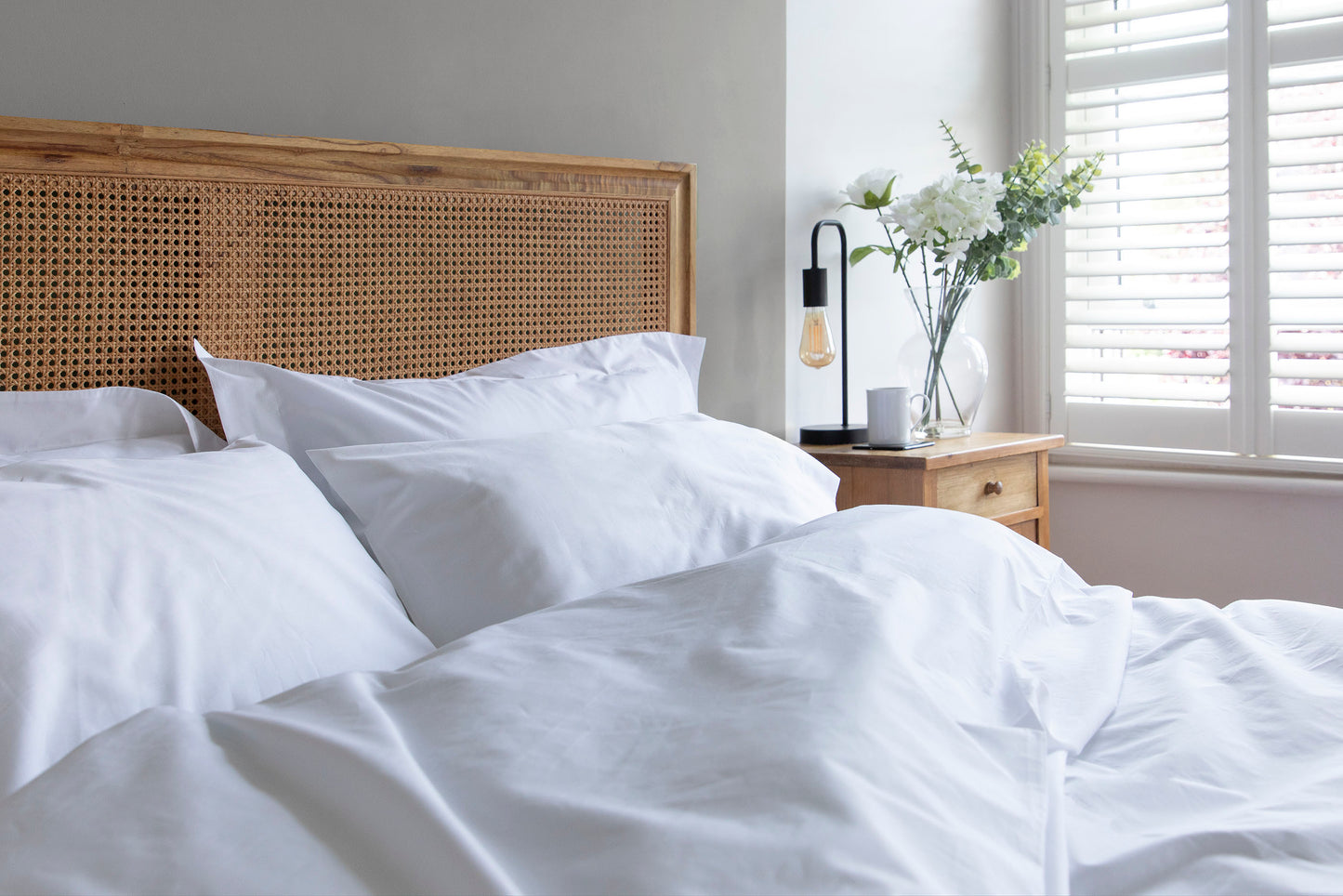
Summer Sale - Ends Sunday - 100% Pure Cotton bedding range, and luxurious handmade 100% European linen bedding.
Crafted for comfort. Priced for a limited time.


By Linen Bay, a small company that believes bedding should be comfortable, honest, and made to last. If there’s one thing we’ve learned from years of sleeping on, testing, and talking about bed sheets, it’s this: Most people don’t buy bad sheets because they don’t care, they buy them because they’ve been misled.
We’ve also listened to countless customers who thought they were “doing everything right” spending more, choosing trusted words like luxury or hotel quality — and still ended up disappointed.
This is what we wish we’d known earlier.
We’ve slept on more disappointing bed sheets than we’d like to admit. Some were cheap impulse buys. Others were expensive “treat yourself” purchases that turned into quiet regrets.
The sheets that felt amazing… for one night
Years ago, we bought a set marketed as “hotel quality, 1000 thread count Egyptian cotton.” They felt incredibly smooth straight out of the packaging, almost suspiciously silky. After a few washes, the reality appeared:
That’s when we realised what we’d actually been feeling at first wasn’t quality — it was chemical softeners.
The expensive set that underperformed
We’ve absolutely paid more and gotten worse quality.
One giveaway was the sound: that papery, rustling crispness that feels impressive at first but slowly becomes irritating and scratchy, leading us to wonder, can bedding cause allergies?
Meanwhile, a much cheaper cotton percale set we already owned stayed breathable, comfortable, and quietly reliable for years.
The biggest regret
Any sheet labelled “luxury” that doesn’t clearly explain what it’s made from, how it’s woven, or how it’s finished.
When brands hide the details, it’s rarely accidental.
Before people find better bedding, they tend to say the same things:
The common thread isn’t fussiness — it’s confusion.
People often tell us, “I thought it was my fault. I thought I was washing them wrong.”
In reality, they were sold sheets designed to impress on day one, not on wash ten.
This isn’t an isolated issue, it’s an industry pattern.
Too many products rely on marketing language instead of material quality.
Some words sound reassuring but tell you very little.
Buzzwords we approach cautiously
None of these are regulated. None guarantee comfort or durability.
Claims that are technically true, but misleading
“100% Egyptian cotton” can legally refer to cotton grown outside Egypt or blended with shorter fibres.
The label alone doesn’t tell you how it will feel or age. Not all cotton behaves the same over time — fibre length, weave, and finishing matter far more than the label, something we explain in Which Cotton Is Best for Bedding? Fibre, Weave & What Really Lasts.
Thread count: Higher isn’t better. Beyond around 400, numbers are often inflated using multi-ply yarns that reduce breathability.
Percale vs sateen: Percale is crisp and breathable; sateen is smoother and warmer. Neither is superior, they suit different sleepers.
Organic: This refers to how cotton is grown, not how soft, durable, or responsibly made the final product is. This is why simply choosing cotton isn’t enough — we’ve explored this further in Is it Better to Sleep in 100% Cotton?.
We’ve tested sheets with identical marketing claims that behaved completely differently after washing.
The difference always came down to fibre quality, yarn strength, and finishing, details rarely highlighted on packaging.
The true test of bed sheets isn’t how they feel out of the packet, it’s how they behave months later.
Problems that appear over time
How poor sheets affect sleep
If sheets feel unbelievably soft before they’ve ever been washed, it’s worth asking why.
One of the most common misconceptions is that a "100% cotton" label automatically guarantees quality. In reality, factors such as fibre length, weave and construction often matter far more. Learn more in our guide to whether bed sheets should be 100% cotton.
Words like organic, ethical, and sustainable are often used generously.
Many customers assume certifications guarantee comfort and longevity.
In reality, they often only confirm basic chemical safety, not craftsmanship, durability, or responsible production.
We’ve seen “eco” sheets that were thin, scratchy, and worn out within months.
True sustainability means making something that lasts, not something that feels virtuous but ends up replaced quickly.
The most expensive mistake
Paying for marketing instead of materials.
The biggest false economy
Replacing cheap sheets every year instead of buying one good set that lasts.
Longevity isn’t just survival
Some sheets never tear they just become uncomfortable long before they fail.
Real quality means staying pleasant to sleep on, not just holding together.
This is where small details make a big difference.
Experiences many people recognise
If we had to name absolute dealbreakers:
What we personally avoid
Anything that relies on buzzwords instead of explaining why it’s good.
What we’d tell a friend
If a product sounds luxurious but won’t explain itself, walk away.
The best bed sheets aren’t the softest on day one, they’re the ones that feel better after every wash. That’s what quality looks like in real life.
And it’s something no amount of marketing can fake.
At Linen Bay, that belief guides everything we make. Which is why our focus is on breathable, long-lasting fabrics you can trust. You can browse all bed sheets made with those principles in mind.

Discover the key differences between sateen and percale weaves. Find your ideal bedding for unmatched comfort and tailored style.

Explore OEKO-TEX® and EUROPEAN FLAX® certified bedding by Linen Bay. Experience premium comfort, sustainability, and ethical luxury.

Transform your bedroom with Linen Bay's certified linen and cotton bedding. Experience unmatched comfort, timeless styles, and sustainability.